

Hello dear hearts and souls, and welcome to week 47!
From India to the World – Our Next Artistic Adventure!
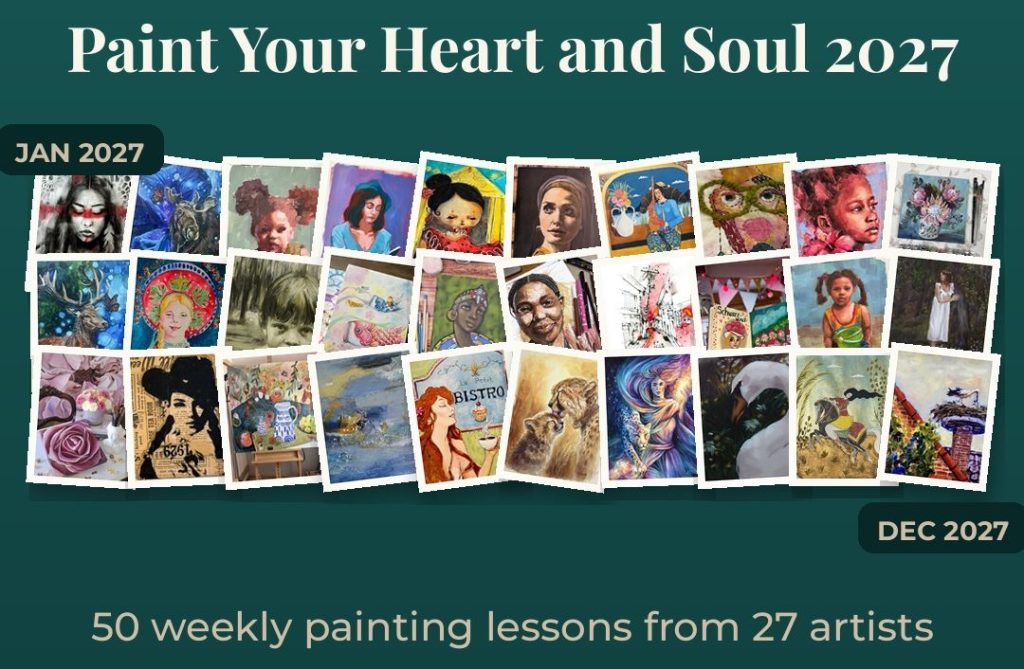
As we approach the final weeks of Paint Your Heart and Soul 2026, we’re already getting a little taste of what awaits us next year!
Our upcoming Paint Your Heart and Soul 2027 theme: Around the World Through Art – will take us on a wonderful journey across countries and cultures, discovering their artistic traditions, stories, colors, and inspiration along the way.
And this week’s lesson with Shilpa Lalit is a perfect little bridge between the two years! We’re traveling to India to explore the beautiful world of Indian folk art and paint Lord Krishna playing his flute. Along the way, we’ll discover the legend behind this beloved figure, the symbolism of his flute, and some fascinating traditions of Indian culture.
But first, a little announcement about PYHaS 2027!
A little more time for the Early Bird price
Our Early Bird spots officially sold out quite some time ago, and the price was supposed to increase. Unfortunately, I had to make an unexpected emergency trip to visit my parents, who live a 12-hour flight away, and wasn’t able to take care of the price change as planned.
With Thanksgiving just around the corner, I’ve decided to leave the Early Bird price available a little longer.
So, if you’ve been thinking about joining us in 2027, you still have a chance to register at the special Early Bird price!
This will be the last chance to save on PYHaS2027 before the price increases.
The offer will end on November 30, so don’t miss it! – CLICK HERE to reserve your spot.
Now, let’s begin our journey to India!
The Music and Magic of Lord Krishna 🇮🇳
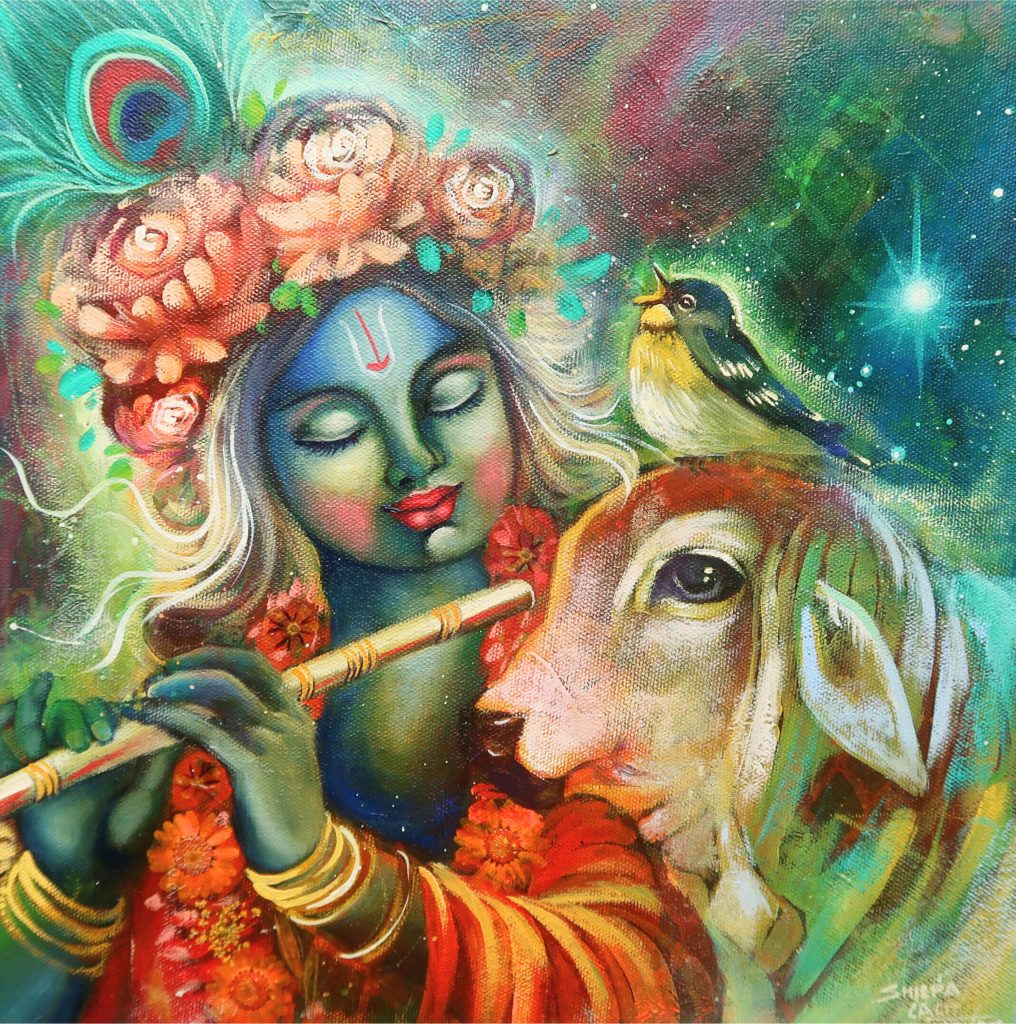
Our new lesson with Shilpa Lalit invites us into a colorful world of Indian folk art, where music, nature, spirituality, and storytelling come together. We’ll be painting Lord Krishna playing his flute, accompanied by a gentle cow and a lively little bird.
But before we pick up our brushes, let’s discover the beautiful story behind this beloved figure and explore a few traditions from the fascinating country of India.
Who is Lord Krishna?
Krishna is one of the most beloved and widely worshipped deities in Hinduism. He is traditionally regarded as the eighth avatar (earthly incarnation) of Lord Vishnu, who is associated with preserving and protecting the universe.
According to Hindu mythology, Krishna’s childhood was spent in the beautiful countryside of Vrindavan, where he grew up among cowherds, surrounded by nature and animals.
He became famous for his playful personality, mischievous childhood adventures, love of butter, and, of course, his magical flute.
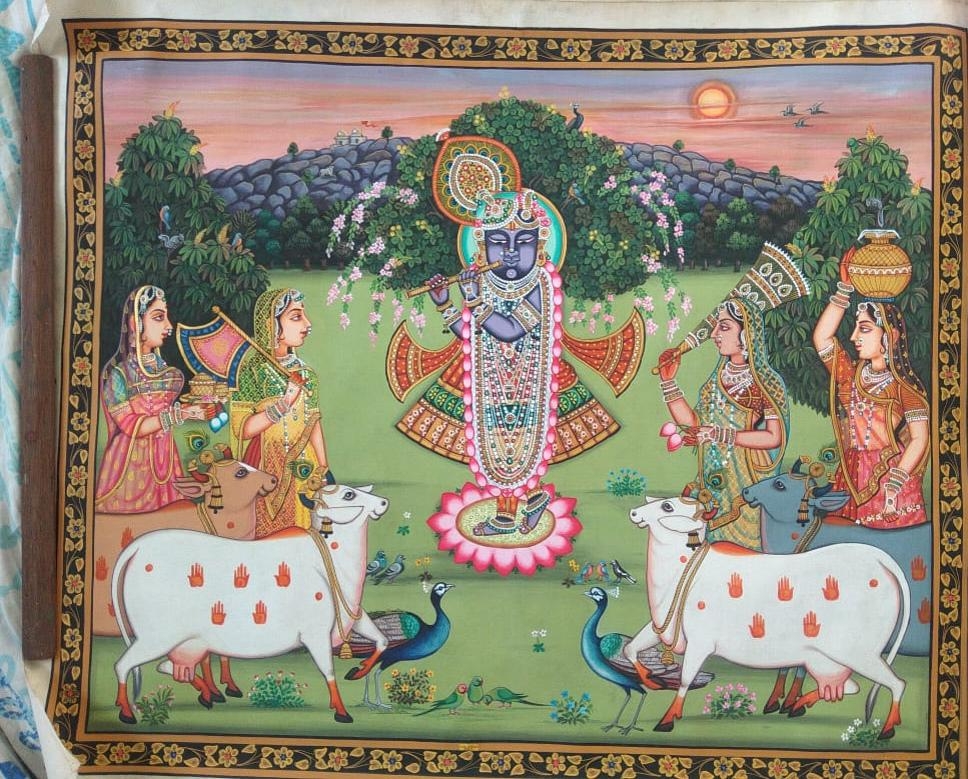
There is a beautiful legend about the sound of Krishna’s flute. It was said to be so enchanting that when he played, everything around him seemed to pause and listen. The cows stopped grazing, birds became still, and the gopis (young cowherd women) left whatever they were doing to follow the music.
His beloved Radha is often depicted alongside him. Their love story is much more than a romantic tale: in Hindu devotional traditions, it represents the soul’s longing for a connection with the divine.
And what does the flute represent?
The flute is often interpreted as a symbol of the human soul. Just as a flute produces beautiful music when it is empty and allows the musician’s breath to flow through it, the spiritual message is that we, too, can become instruments of something greater when we let go of our ego and open our hearts.
Krishna is also associated with love, compassion, joy, protection, and the harmony of all living things.
A little about Indian art and traditions
India has one of the richest and most diverse artistic heritages in the world. Its folk art traditions developed in villages and communities across different regions, often passed down through generations.
Many traditional paintings tell stories from ancient epics and mythology, celebrate nature, or mark important moments in family and community life.
Some fascinating examples include:
- Madhubani (Mithila) painting: Originating in Bihar, this tradition is famous for its intricate patterns, vivid colors, flowers, birds, animals, and mythological figures. Traditionally, women painted the walls of their homes for weddings and other celebrations.

- Warli art: From Maharashtra, this distinctive style uses simple geometric shapes and white figures against earthy backgrounds to tell stories of village life, nature, celebrations, and community.

- Pattachitra: A traditional painting style from Odisha and parts of eastern India, known for intricate details, decorative borders, and stories of Hindu deities, especially Lord Jagannath and Krishna.
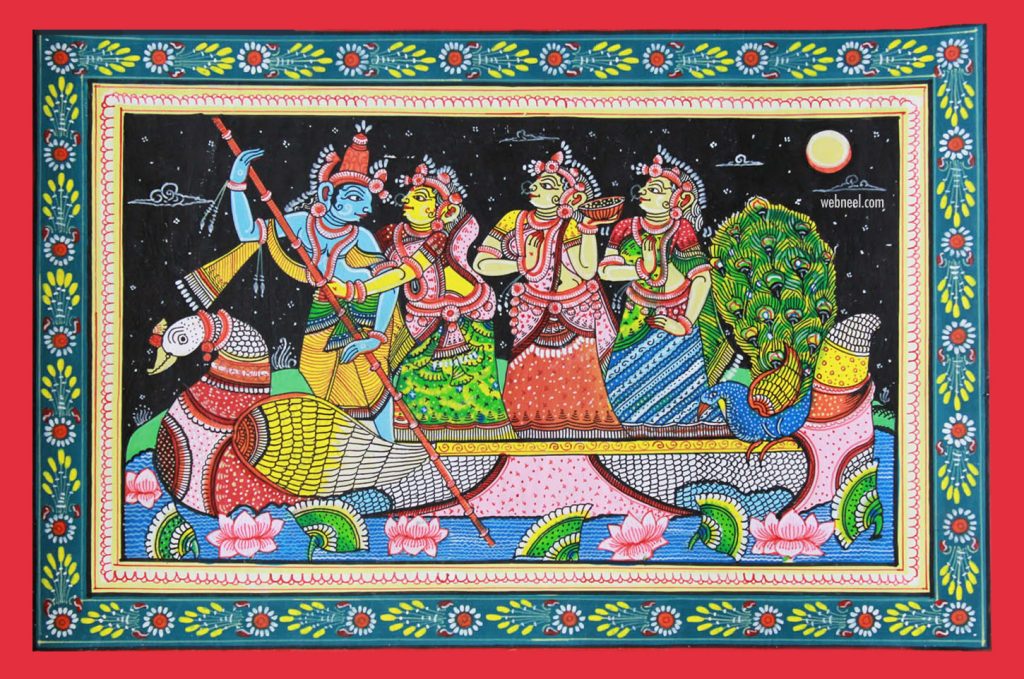
One particularly interesting detail about Indian folk art is that nature is rarely just decoration. Flowers, birds, trees, animals, the sun, and the moon often carry symbolic meanings and help tell the story.
Perhaps this is one reason why our painting of Krishna feels so special: the figure, the animals, the music, and the surrounding details all belong to one harmonious world.
Did you know?
A few fascinating facts about India
- India is the birthplace of yoga, a tradition that combines physical practice, breathing, meditation, and philosophy.
- The peacock is India’s national bird. Its beautiful feathers are also traditionally associated with Lord Krishna, who is often depicted wearing a peacock feather in his crown.
- Cows hold a special place in many Hindu traditions and are associated with motherhood, nourishment, and nonviolence. This is one reason Krishna is so often portrayed among cows.
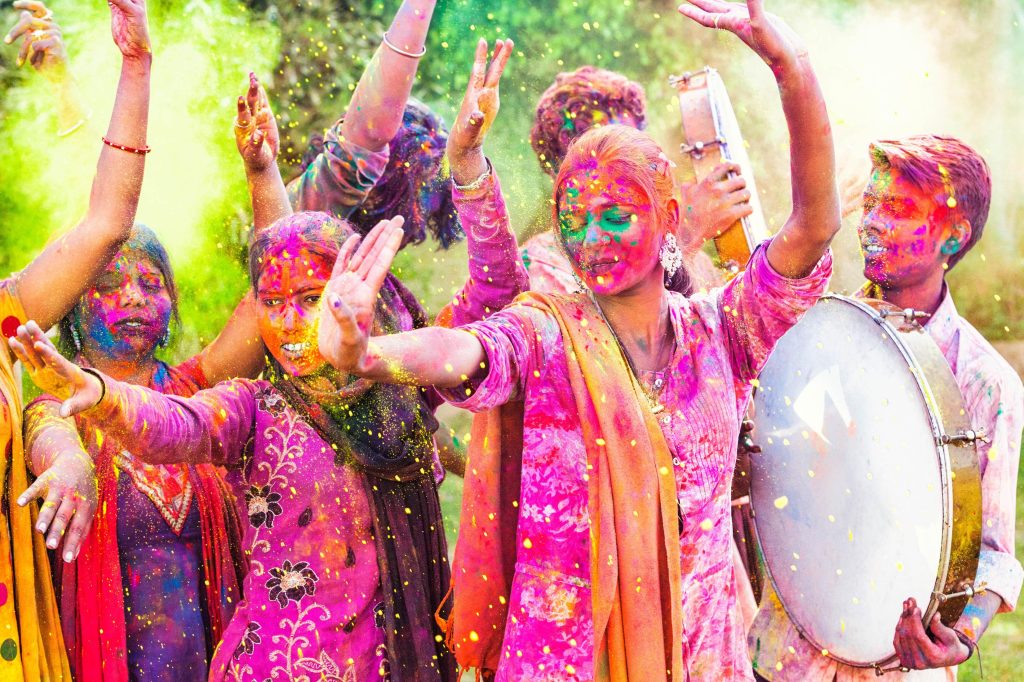
- India celebrates Holi, the famous Festival of Colors, with vibrant colored powders, music, dancing, and joyful gatherings. The festival is also connected with stories of Krishna and Radha.
- The Indian classical music tradition includes ragas, melodic frameworks associated with particular moods, seasons, and even times of day. Music has long been considered a way to express devotion and connect with something beyond the everyday world.
A little taste of India: Let’s make Masala Chai!

No journey to India would be complete without a cup of chai!
Masala chai is a traditional spiced milk tea enjoyed in homes, cafés, and street stalls throughout India. Every family has its own favorite combination of spices.
Here is a simple version you can make at home.
Easy Homemade Masala Chai
Ingredients (2 cups):
- 1 cup water
- 1 cup milk
- 2 teaspoons black tea (or 2 tea bags)
- 2–3 green cardamom pods, lightly crushed
- 1 small slice of fresh ginger
- 1 small cinnamon stick
- 2 cloves
- Sugar or honey to taste
Instructions:
- Bring the water to a boil with the cardamom, ginger, cinnamon, and cloves.
- Let the spices simmer for about 3–5 minutes.
- Add the black tea and simmer for another minute.
- Pour in the milk and bring everything to a gentle boil.
- Strain into cups, sweeten to taste, and enjoy!
The wonderful aroma of ginger, cinnamon, and cardamom is almost as comforting as the tea itself.
For additional reading and beautiful historical artwork, these are excellent resources:
- Smithsonian National Museum of Asian Art – Krishna Fluting — especially interesting explanation of the symbolism.
- Los Angeles County Museum of Art – Krishna and Radha — the spiritual meaning of their love story.
- The Living Art Traditions of India — an introduction to India’s regional folk painting traditions.
Painting Lord Krishna Playing the Flute with Shilpa Lalit
My name is Shilpa Lalit and I am also known as ” Artyshils ” on the internet. I am a full time painting artist with my works residing in various collections around the world. I am also an entrepreneur with my own line of painting brushes called ” Artyshils Art Brushes “. I have a Bachelors in Fine Arts degree from Nagpur University, India and I am currently living and working from my studio in Burlington, Canada.
As an artist, I am captivated by the vibrant and diverse world that surrounds us. From the creatures that roam the earth to the emotions that pulse through us, the spirituality that nourishes our souls, and the connections that bind us all, I strive to bring these elements to life in my paintings. Using bright and bold colors, I celebrate the diversity of nature, animals, and the human experience, creating works that burst with energy, joy, and life. My goal is to inspire a sense of wonder, warmth, and liveliness in all those who encounter my work, inviting them to connect with their own hearts, spirits, and emotions, and to see the world through a lens of beauty, vibrancy, and positivity.
Intro
Part 1
Part 2
Part 3
- Make sure you are using Google Chrome or Firefox.
- Click on the link “Download” at the foot of the video